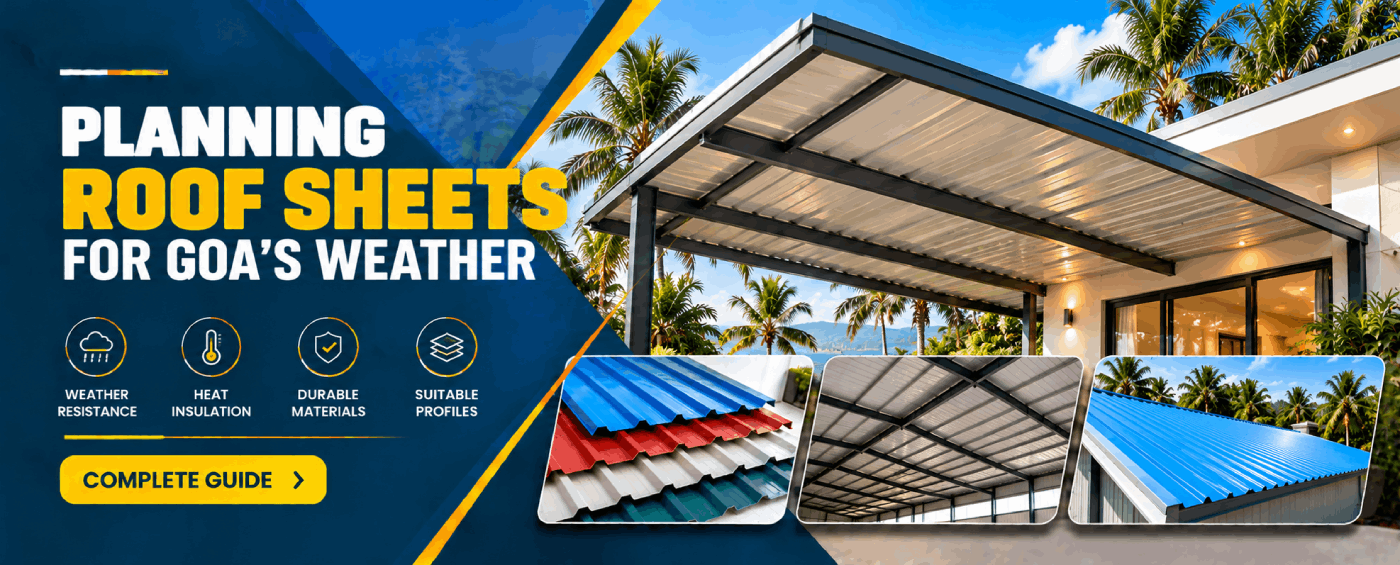
Planning Roof Sheets for Goa’s Weather
Choosing the right roofing sheets is important when constructing or renovating a property in Goa. The local climate brings heavy monsoon rainfall, high humidity, strong seasonal winds and considerable summer heat. These conditions make roofing material selection, installation planning and regular maintenance important considerations.
Whether you are building a residential house, commercial shed, workshop, storage area or outdoor covering, selecting suitable roof sheets can help you plan a more practical roofing structure.
At Khushan Fabrication, we help customers discuss roofing sheet requirements for different residential and commercial applications. Based in Mandrem, Goa, and led by owner Mr. Khushnasib Alam, who has 15 years of fabrication industry experience, we focus on understanding project requirements before discussing suitable roofing options.
1. Understand Goa’s Weather Before Choosing Roof Sheets
Goa has a tropical coastal climate with high humidity and a distinct monsoon season. The South-West Monsoon generally lasts from June to September, bringing a significant proportion of the state's annual rainfall. Coastal locations also experience humid conditions throughout much of the year. Goa Department of Information and Publicity Central Ground Water Board – Goa Bulletin
Heavy Monsoon Rainfall
Roofing sheets must be selected and installed with proper rainwater drainage in mind. Roof slope, sheet overlap, fasteners and flashing details all influence how effectively rainwater is directed away from the structure.
High Humidity and Coastal Exposure
Properties near the coast may experience humid air and salt exposure. These conditions should be considered when selecting metal roofing sheets, supporting structures, fasteners and protective finishes.
Summer Heat and Sun Exposure
During the warmer months, roof surfaces receive considerable sunlight. Roofing material, colour, ventilation and insulation arrangements can influence indoor comfort.
Seasonal Winds and Rain
Roofing structures should be designed with appropriate support and fastening arrangements to account for local wind exposure. The required structural design depends on the building, location and site conditions.
2. Choose the Right Type of Roofing Sheets
Different roofing materials are available for residential, commercial and industrial applications. The appropriate choice depends on your budget, building design, intended use and environmental exposure.
TATA Roofing Sheets
TATA roofing sheet options can be considered for different construction and roofing requirements. Before selecting a particular product, check its specifications, coating, thickness and suitability for the intended application.
GI Roofing Sheets
Galvanised Iron (GI) sheets are commonly considered for sheds, workshops, storage areas and other roofing applications. When using GI sheets in coastal Goa, pay attention to the coating specification, exposed edges, fasteners and maintenance requirements.
UPVC Roofing Sheets
UPVC roofing sheets may be considered for selected residential and commercial applications. Their suitability depends on the product specification, supporting structure, installation instructions and intended use.
Polycarbonate Roofing Sheets
Polycarbonate sheets are often considered for areas where natural light transmission is desired. They may be suitable for selected covered outdoor spaces, walkways and other applications, depending on the product specification and installation requirements.
Steel Roofing Sheets
Steel roofing sheets are another option for different construction and covering requirements. Their grade, protective coating and suitability for coastal exposure should be evaluated before selection.
Important: Do not choose roofing sheets based only on appearance or price. Compare product specifications and manufacturer recommendations before finalising the material.
3. Consider Corrosion Protection for Metal Roof Sheets
Corrosion is an important consideration for metal roofing in coastal areas. Humidity, rainwater and salt exposure can affect exposed metal surfaces and components over time.
Check the Protective Coating
Ask about the type of protective coating applied to the roofing sheet. The coating specification should be suitable for the property's exposure conditions.
Pay Attention to Cut Edges
Cut edges, drilled holes and damaged coating areas can become vulnerable points. Appropriate treatment and installation practices should be followed according to the manufacturer's instructions.
Select Suitable Fasteners
Roofing screws, washers and other fixing components should be compatible with the roofing material and environmental conditions. Incompatible components can contribute to premature deterioration.
Plan Regular Inspections
Inspect the roof periodically for damaged coatings, loose fasteners, corrosion, water leakage and blocked drainage points.
4. Select the Correct Roof Slope and Drainage Arrangement
One of the most important aspects of roofing in Goa is managing heavy monsoon rainfall.
Even suitable roofing sheets can develop leakage problems if the roof design and installation are not properly planned.
Plan the Roof Slope
The roof slope should follow the roofing manufacturer's recommendations and the requirements of the building design. A suitable slope helps rainwater flow towards the drainage points.
Provide Proper Sheet Overlap
The overlap between roofing sheets should follow the product installation guidelines. Incorrect overlap can allow rainwater to enter through joints.
Install Suitable Flashing
Flashing is important around roof edges, walls, ridges and other junctions. Proper detailing helps manage water entry at these vulnerable points.
Plan Gutters and Downpipes
Rainwater should be directed away from the building through appropriately sized gutters and downpipes. Drainage capacity should be considered according to the roof area and local rainfall conditions.
5. Choose Roofing Sheets According to Your Property Requirements
Different properties require different roofing arrangements. Before choosing a material, consider how the covered area will be used.
Residential Roofing
For houses, villas and residential extensions, consider appearance, indoor comfort, ventilation, rainwater drainage and maintenance requirements.
Commercial Roofing
Shops, offices and commercial buildings may require roofing sheets based on the building layout, usage, covered area and operational requirements.
Sheds and Workshops
For workshops and storage sheds, consider the structure's dimensions, supporting framework, ventilation and intended activities inside the covered area.
Terrace and Outdoor Coverings
For terrace coverings and outdoor seating spaces, consider sunlight, rain protection, natural lighting and the overall appearance of the property.
6. Consider Heat, Ventilation and Indoor Comfort
Roofing decisions should not focus only on rain protection. The roof also influences the temperature and comfort of the space below it.
Choose Suitable Roofing Materials
Compare the thermal characteristics and manufacturer specifications of different roofing materials before making a decision.
Plan Roof Ventilation
Suitable ventilation arrangements can help manage trapped hot air in covered spaces. The ventilation design should consider the building layout and intended use.
Consider Insulation
For selected residential and commercial applications, an appropriate insulation system may help improve indoor comfort. The insulation material and installation method should be selected according to the building requirements.
Think About Natural Lighting
If daylight is important, consider whether suitable polycarbonate roofing sections can be incorporated into the design. Their placement should account for heat, weather exposure and the manufacturer's installation instructions.
7. Understand the Importance of Proper Roofing Installation
The performance of roofing sheets depends not only on the material but also on the supporting structure and installation quality.
Check the Supporting Framework
The roof framework should be designed to carry the roofing sheets and account for the applicable structural loads. The required member sizes and spacing should be determined by a qualified professional.
Use Suitable Roofing Fasteners
Fasteners should be compatible with the sheet material and installed according to manufacturer recommendations. Incorrect fixing can cause leakage or damage.
Check Sheet Alignment
Proper sheet alignment and overlap help create a consistent roofing arrangement and reduce the risk of water entry.
Inspect Roof Junctions
Pay attention to ridges, corners, wall connections, roof edges and openings. These areas require appropriate detailing to manage rainwater.
8. Set a Practical Budget for Roofing Sheets
The overall cost of a roofing project depends on several factors. Comparing only the per-sheet price may not give an accurate picture of the total project cost.
Factors That Affect Roofing Costs
-
Type and specification of roofing sheets.
-
Sheet thickness and dimensions.
-
Total roof area.
-
Supporting framework requirements.
-
Fasteners and accessories.
-
Flashing and drainage arrangements.
-
Installation and site preparation.
-
Protective coating and finishing requirements.
For a more accurate estimate, discuss the roof dimensions, preferred material, building type and location with your roofing or fabrication provider.
9. Why Choose Khushan Fabrication for Roof Sheets in Mandrem, Goa?
Khushan Fabrication helps customers discuss roofing sheet and related fabrication requirements for different property applications.
15 Years of Fabrication Experience
Owner Mr. Khushnasib Alam brings 15 years of experience in the fabrication industry.
Multiple Roofing Sheet Options
Customers can discuss TATA sheets, GI sheets, UPVC sheets, polycarbonate sheets and steel roofing sheet requirements.
Residential and Commercial Applications
Roofing requirements can be discussed for houses, villas, sheds, workshops, storage spaces and commercial properties.
Local Business in Mandrem
Khushan Fabrication is based at Askawada, Mandrem Road, Mandrem, Goa.
Direct Communication
Customers can discuss their roof measurements, preferred material and project requirements directly.
10. Frequently Asked Questions About Roof Sheets in Goa
Q1. Which roofing sheets are suitable for Goa's weather?
The suitable option depends on the building design, budget, coastal exposure and intended application. TATA, GI, UPVC, polycarbonate and steel roofing sheets can be evaluated according to their product specifications.
Q2. Are GI sheets suitable for coastal areas like Mandrem?
GI sheets may be considered for suitable applications, but coating specifications, cut-edge protection, compatible fasteners and maintenance should be evaluated carefully in coastal environments.
Q3. Do roof sheets need a slope in Goa?
A suitable roof slope is important for directing rainwater away from the building. The required slope depends on the roofing material and manufacturer installation recommendations.
Q4. Which roofing sheets allow natural light?
Polycarbonate roofing sheets are available in options that allow natural light transmission. The appropriate product should be selected according to its specifications and intended application.
Q5. How can I reduce heat under a metal roof?
Roofing material selection, suitable insulation, ventilation and roof design can all influence indoor comfort. The appropriate combination depends on the building and its use.
Q6. How often should roofing sheets be inspected?
Regular inspections are advisable, particularly before and after the monsoon season. Check for corrosion, loose fasteners, damaged sheets, leakage and blocked drainage points.
Q7. Where can I enquire about roof sheets in Mandrem, Goa?
You can contact Khushan Fabrication at Askawada, Mandrem Road, Mandrem, Goa, to discuss roofing sheet and related fabrication requirements.
11. Contact Khushan Fabrication for Roof Sheets in Mandrem, Goa
Planning a new roofing project or considering replacing your existing roof sheets? Contact Khushan Fabrication to discuss your requirements.
Share your roof measurements, preferred roofing material, property type and project location so that suitable options can be discussed.